-
Complete Linen Sprays Buying Guide for Retailers, Wholesaler...You walk into a hotel room that has just been prepared, and the bedding carries a quiet, clean scent that feels neither perfumed nor artificial. That impression rarely happens by accident. It is the ...

-
Choosing the Right Kitchen Candle: Scents, Soy Wax, and Whol...Cooking smells are the hardest test for any home fragrance. Garlic, fish, onion, oil, and fried food create strong molecules that cling to walls long after the oven is off. A dedicated kitchen candle...
-
Treoir Diffuser Seomra Folctha: Conas Diffusers Giolcach a R...Más é do sheomra folctha an chéad seomra a théann tú isteach tar éis cithfholcadh te agus an seomra deireanach a théann tú tríd sula bhfágann tú an teach, tá a fhios agat cheana féin cé chomh ta...

En
CUARDACH

Baile / Nuacht / Nuacht Tionscal / Choosing the Right Kitchen Candle: Scents, Soy Wax, and Wholesale Tips
Choosing the Right Kitchen Candle: Scents, Soy Wax, and Wholesale Tips
Cooking smells are the hardest test for any home fragrance. Garlic, fish, onion, oil, and fried food create strong molecules that cling to walls long after the oven is off. A dedicated kitchen candle is designed to handle this specific job, and it usually does it better than an aerosol spray or a wax melt. In short, the right kitchen candle is a clean-burning soy or soy-blend candle with a fresh citrus or green scent, placed in a stable jar and kept away from the stove. That combination is what professional kitchen candle programs rely on, whether they are sold in supermarkets, gift shops, or private-label sets.
“Kitchen candle” is not just a scent name on a label. Kitchens are small, warm, and full of airborne grease, so the candle must burn clean, produce little soot, and work when lit for 30 minutes rather than all afternoon. Kitchens are also busy family spaces, which means the candle has to be stable and difficult to knock over. These requirements separate a kitchen candle from a decorative living-room candle, and they are exactly the criteria a factory team evaluates when developing a new scent, wax formula, or container.
For retail buyers, the kitchen candle category is attractive because it generates repeat purchases. Consumers burn kitchen candles quickly and restock regularly, which makes the category a reliable pillar in any home fragrance range. This guide covers the scents that actually work, the wax and wick details that matter, how to burn a kitchen candle safely, the difference between a candle and a reed diffuser, and how to evaluate a kitchen candle manufacturer for wholesale or OEM orders.
Key takeaway: Treat a kitchen candle as a functional product first and a decorative object second. Prioritise a clean burn, a stable jar, and a scent that fits a food-heavy environment.
What Makes a Kitchen Candle Different
Kitchens present unusual conditions for candles. The room is hotter than the rest of the house, especially near the oven, and it contains grease particles and steam that normal scented candles were not designed for. A living-room candle may still smell pleasant in a kitchen, but it will smoke more, burn unevenly, or feel too perfumed next to food. A well-formulated kitchen candle compensates for all of these factors.
Heat affects the melt pool. When the ambient temperature in a kitchen is higher, the wax melts faster and the fragrance releases more quickly. A kitchen candle therefore benefits from a wax with a moderate melting point, such as soy wax, which melts around 49 to 55 degrees Celsius. Paraffin wax, by comparison, tends to burn hotter and deposit more soot, which is not ideal around food and stainless steel surfaces.
Grease and moisture also matter. Airborne cooking oil can settle on the wick and cause smoking, while steam can make the flame dance and produce an uneven burn. That is why many kitchen candles use cotton or wood wicks that are sized carefully for the jar diameter, and why a well-designed kitchen candle often comes with a lid to keep dust and grease off the wax surface between uses.
Scent neutrality is another defining point. A kitchen candle should not compete with the aroma of the food being prepared. Lemon, orange, basil, and light green notes complement most dishes, while heavy floral or musky scents can make a kitchen feel artificial. In practical terms, the fragrance load of a kitchen candle is often adjusted to be noticeable but not overwhelming, so the candle can be lit during cooking without clashing with the meal.
Finally, burn cycles are different. Kitchen candles usually last one to two hours at a time, not six. That means the wick, wax, and fragrance system must release enough scent quickly. A candle developed as a kitchen candle will be tested for short repeated burns, not just a single eight-hour test. Below is a simple breakdown of how kitchen conditions translate into product requirements.
| Kitchen condition | Why it matters | Ideal candle solution |
|---|---|---|
| High ambient heat | Wax melts faster, scent releases quicker | Soy wax or soy blend with a moderate melt point |
| Airborne grease | Can coat the wick and create smoke | Low-soot wick and a covered jar or lid |
| Strong food odors | Heavy floral scents clash with cooking | Citrus, green, or light gourmand fragrance |
| Short burn sessions | Must release scent within 30 minutes | Correct wick sizing and calibrated fragrance load |
| Countertop safety | Busy space with hot pans and sharp objects | Wide-bottom jar or cement cup that resists tipping |
Key takeaway: A kitchen candle is engineered for heat, grease, short burn sessions, and scent freshness. Standard decorative candles are rarely tested for these conditions.
How to Choose the Right Kitchen Candle Scent
Choosing the right kitchen candle scent starts with understanding what cooking odors are and how fragrance interacts with them. Cooking smells are a mixture of volatile organic compounds, moisture, and grease. Citrus and green notes are effective because they provide a clean, sharp contrast to those heavy molecules. Gourmand scents such as vanilla and coffee work differently: they add a comforting background that blends with the food environment instead of fighting it.
The table below groups the main scent families used in kitchen candles, notes that are typical of each family, and the situation where each one performs best.
| Scent family | Typical notes | Best for |
|---|---|---|
| Citrus | Lemon, orange, grapefruit, bergamot | Everyday cooking odors, fish, garlic |
| Green and herbal | Basil, thyme, sage, eucalyptus, cucumber | Vegetable prep, open kitchens, summer |
| Gourmand | Vanilla, caramel, coffee, cocoa | After-dinner atmosphere, bakery kitchens |
| Spice | Cinnamon, clove, ginger, cardamom | Holiday cooking, cool-season kitchens |
| Floral | Lavender, rose, jasmine, peony | Kitchens with dining nooks, gentle ambience |
Scent is the first thing that convinces a shopper to buy a kitchen candle. A well-chosen kitchen candle can make a small kitchen feel cleaner, brighter, and more organised. Retail data across home fragrance programs shows that consumers do not choose the same scents for kitchens as for bedrooms. Citrus and green notes dominate kitchen candle displays because they read as fresh rather than perfumed. The chart below summarises how kitchen candle buyers typically respond to the main scent families.
- Citrus 38%
- Green & herbal 22%
- Vanilla & gourmand 18%
- Spice / coffee 12%
- Floral & other 10%
Citrus leads kitchen candle sales because lemon and orange notes feel clean and food-compatible. Grapefruit adds a slightly bitter freshness that works especially well in small kitchens. Green and herbal scents, such as basil, thyme, sage, and eucalyptus, are also popular because they resemble actual cooking ingredients. Vanilla and other gourmand notes offer a softer, bakery-like atmosphere after a meal. Coffee-scented candles are a practical niche because coffee naturally absorbs strong odours. Floral notes hold only a 10% share in kitchen-specific lines, largely because shoppers associate flowers with bedrooms and living rooms. For wholesale buyers, this pattern suggests stocking citrus-led sets plus one green-herbal SKU for a balanced assortment. Scent preferences shift by region; retailers in Japan, the US, the EU, and the UK all respond slightly differently to fresh versus sweet profiles. US retail programs tend to perform best with strong lemon and orange statements. European and Japanese programs, by contrast, often show stronger demand for subtle green and herbal blends. Seasonal rotation also increases repeat purchases: light citrus for spring and summer, spiced citrus for autumn and winter. A final pattern is that kitchens reward frequent scent changes, so smaller candles and variety sets outperform one oversized candle.
Key takeaway: Citrus and green scents are the safest foundation for a kitchen candle line because they suppress cooking odors without fighting food aromas. Add one gourmand or spice SKU for seasonal variety.
Wax, Wick, and Container Choices for a Kitchen Candle
Wax is the heart of a kitchen candle. Soy wax is the most popular choice for kitchen candles because it is renewable, biodegradable, and cleaner burning than paraffin. It also has a lower melting point, which means the candle creates a smaller, steadier melt pool in a warm kitchen and releases fragrance gradually. Many suppliers describe soy candles as “organic eco soy wax” to highlight their plant-based origin.
Paraffin remains common in budget candles because it is inexpensive and holds scent well, but it produces more soot and is derived from petroleum. In a kitchen, where people eat and prepare food, a clean-burning wax such as soy, coconut, or a soy blend is a better sales argument. Coconut wax is smoother and offers excellent scent throw but costs more. Many commercial kitchen candles use an 80/20 soy-coconut blend to control cost while improving performance.
| Wax type | Burn profile | Soot level | Scent throw | Best fit for kitchen |
|---|---|---|---|---|
| Soy wax | Slow, cool, even melt pool | Low | Medium to strong | Excellent for daily use |
| Coconut wax | Smooth, luxurious, strong scent release | Very low | Strong | Premium kitchen candles |
| Soy-coconut blend | Balanced cost and performance | Low | Good to strong | Great for private-label lines |
| Paraffin | Fast fragrance release, hotter flame | Higher | Strong | Budget or novelty candles |
The wick is the second critical component. Cotton flat wicks are the standard for soy kitchen candles because they burn consistently and hold their shape. Wood wicks are popular in farmhouse-style kitchens because they create a gentle crackling sound and a wider flame, but they need to be trimmed carefully and kept away from drafts. Every wick must be lead-free and correctly sized for the container. A wick that is too large creates a deep melt pool and smoke; a wick that is too small tunnels and wastes wax.
Container choice affects safety, heat distribution, and visual identity. Glass jars are the most common kitchen candle containers because they are transparent, stable, and heat resistant. A wide-mouth glass jar lets the melt pool reach the edges quickly, which is important for short burn sessions. Cement cups have become popular for rustic kitchen styling; they absorb heat and give a natural texture, but they need a slightly larger wick because the material holds heat differently. Whether the container is glass, cement, or tin, the base must be wider than the top so the candle is difficult to tip over.
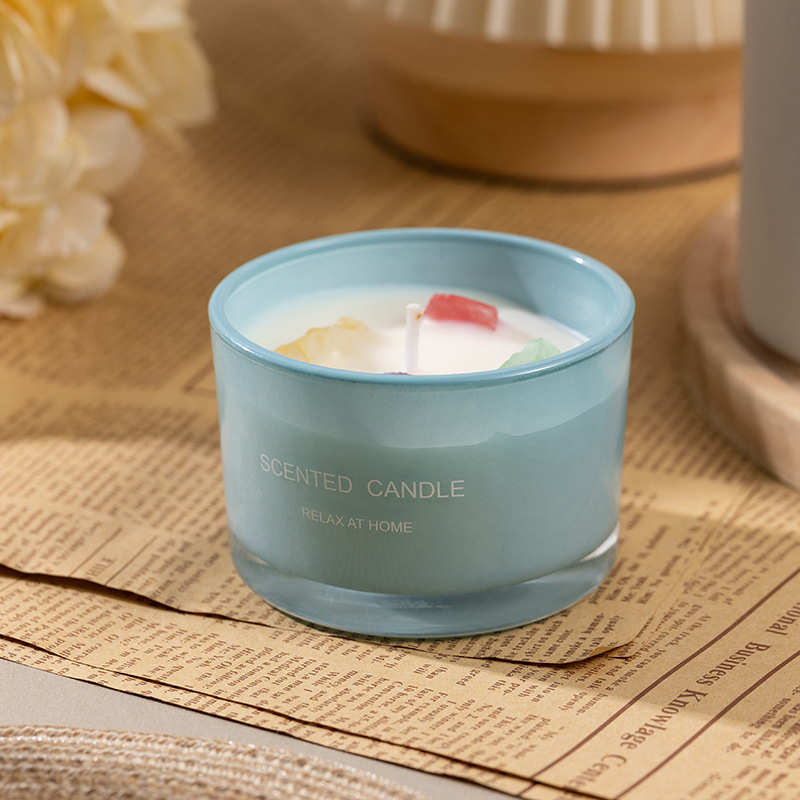
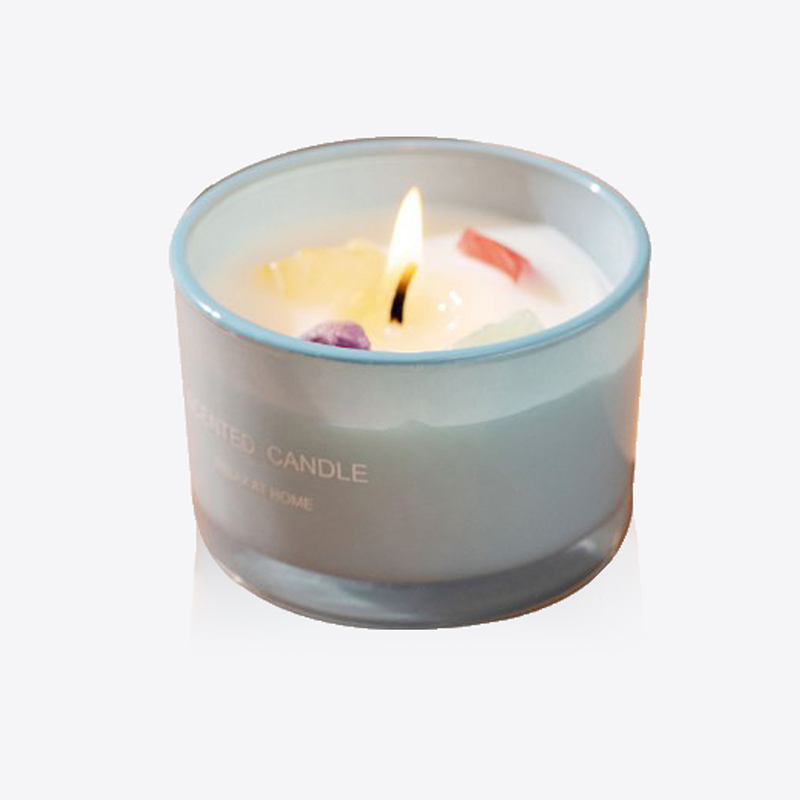 Classic White Bottle Luxury Scented Soy Wax CandleThis white glass bottle candle suits kitchen countertops with its stable base and clean-burning soy wax. Its essential oil fragrance adds a pleasant scent while the matte label resists grease marks.View Product →
When you select a white or black glass bottle for a kitchen candle, choose a matte label that resists grease marks and a lid that protects the wax between uses. A candle sold for kitchen use should also be tested for fill level, wick centering, and lid fit, because these details affect both safety and the customer’s first impression.
Key takeaway: Soy or soy-coconut wax, a correctly sized lead-free cotton wick, and a wide stable glass jar form the safest and most reliable kitchen candle construction.
Kitchen Candle vs Reed Diffuser: Which One Belongs on a Countertop?
Kitchen candles and reed diffusers both solve kitchen odor problems, but they work in different ways. A kitchen candle produces immediate fragrance and creates a warm visual focal point, while a reed diffuser releases scent continuously without a flame. The best choice depends on how the kitchen is used and where the fragrance product will be placed.
A kitchen candle is ideal for the dining area of an open-plan kitchen, a kitchen island, or a breakfast bar. It communicates warmth and attention, especially when guests are present. A reed diffuser is better suited to windowsills and shelves close to the cooking zone, where a flame would be unsafe or where the customer simply wants a constant background scent without managing a wick.
Kitchen candleProvides immediate visible flame and scent within minutes. Best for dinner ambience, evening use, and display on tables. Requires supervision and correct burning habits. Strong scent control because the consumer chooses when to light it. Replaced frequently, creating repeat purchases. Can be made with soy wax, glass jars, and custom labels. |
Reed diffuserReleases a steady scent with no flame and no maintenance. Best for continuous odor control on counters and shelves. Safe to leave on while cooking or sleeping. Lower daily control; the scent level is not adjustable without removing reeds. Lasts weeks or months from one bottle. Ideal for stores looking to sell a non-flame kitchen fragrance option. |
Many retailers choose to stock both formats. The candle attracts customers who enjoy ritual and ambience, while the diffuser appeals to safety-conscious households and kitchens with young children. A manufacturer with experience in both categories can keep the scent profiles consistent across the two formats, so the same “lemon-basil kitchen” concept works as a candle and as a reed diffuser. This consistency strengthens a private-label brand and simplifies shelf planning.
For customers who prefer a decorative candle with a natural touch, a cement cup candle works well on open shelves and rustic-style kitchen islands. The cement material contrasts with stainless steel appliances and adds a handmade feel. It also insulates better than a thin glass jar, which means the surface stays cooler to the touch during longer burns.
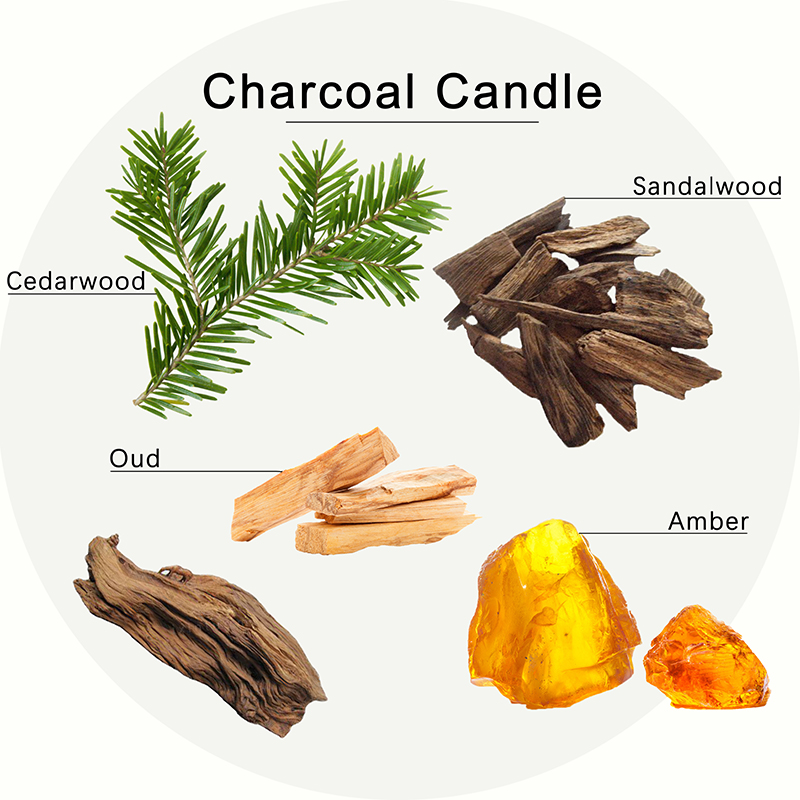 Cement Cup Soy Wax Scented Candle with Natural FragranceOffering about 70 hours of burn time, this cement cup candle provides a rustic look and cooler surface during use. The natural soy wax carries intense fragrance without overheating.View Product →
Key takeaway: A kitchen candle wins for ambiance and immediate odour control; a reed diffuser wins for continuous, flame-free freshness. A balanced kitchen fragrance program stocks both.
Kitchen Candle Safety: How to Burn Soy Wax Candles Correctly
Burning a candle in a kitchen requires more attention than burning one in a living room because the environment contains heat sources, oil, and steam. The first rule is placement. Keep the kitchen candle at least one meter away from the stovetop, oven vents, and any source of direct heat. Do not place it near paper towel holders, dish towels, or a window where a sudden draft can blow the flame sideways.
Trim the wick to about five millimetres before every burn. This simple step prevents soot, keeps the flame steady, and stops the wick from mushrooming. When you light a soy wax kitchen candle for the first time, let the wax melt all the way to the edge of the jar. A full melt pool on the first burn prevents tunnelling and ensures that every later burn releases the right amount of fragrance.
Kitchen candles should not burn for many hours. A reasonable session is one to four hours, depending on the jar size and how much fragrance is needed. After four hours, the candle should be extinguished, cooled, and returned to its lid. Burning a candle until the bottom dries out risks overheating the glass and creating cracks.
If the kitchen has a strong extraction fan, avoid placing the candle directly in its path. Ventilation overhead can make the flame flicker and cause uneven burning. Also, do not move a candle while the wax is liquid. Soy wax melts at a low temperature, but moving a lit candle is still a burn risk. Always extinguish the flame first, let the wax solidify, and then relocate the candle.
Proper extinguishing is just as important as proper lighting. Use a candle snuffer or, if the jar has a lid, place the lid over the flame until it goes out. Blowing out a candle can cause hot wax to splatter onto the countertop. After extinguishing, recentre the wick while the wax is still soft so the next burn starts clean.
Key takeaway: Most kitchen candle problems are caused by bad placement and untrimmed wicks. A stable position away from the stove, a five-millimetre wick, and a one-to-four-hour burn time keep soy kitchen candles safe and clean.
Buying Kitchen Candles Wholesale: A Manufacturer Selection Checklist
Retailers, supermarket buyers, and brand owners who want to launch a kitchen candle line should evaluate suppliers the same way they would evaluate any home fragrance manufacturer. Kitchen candles are consumable products with high repurchase rates, but selling them safely requires consistent production quality, correct labelling, and reliable compliance testing. Here is a practical checklist for wholesale buyers looking for a kitchen candle supplier.
- Check factory certifications. A responsible kitchen candle manufacturer should hold BSCI and WCA audits. These certifications demonstrate that the factory is commercially compliant, socially responsible, and accepted by major retail buyers in Europe and North America.
- Ask about regulatory compliance for your target market. Candles exported to the EU may need REACH compliance for fragrance oils, while candles sold in the US should follow ASTM standards for candle safety and, where necessary, California Proposition 65 labelling. A mature supplier will provide declarations and test reports.
- Confirm that all wicks are lead-free and that fragrance oils are suitable for the intended market. Kitchen candles, in particular, should avoid phthalate-heavy fragrances because they are used near food preparation areas.
- Request burn test documents. A professional kitchen candle manufacturer tests for burn time, melt pool size, wick curling, soot deposits, and container temperature. Ask for the latest burn test report for each SKU you plan to order.
- Review quality control procedures. Look for checks on wick centering, fill height, lid fit, label application, and packaging. Inconsistent fill heights and tilted wicks are common complaints in low-cost candle production.
- Evaluate the factory’s R&D flexibility. The best wholesale kitchen candle programs are built on custom scent development, jar selection, and private-label branding. A factory with rapid R&D ability can adapt a stock soy candle into a kitchen-specific product with a unique scent and design.
- Confirm capacity and lead times. A 6,500-square-metre factory with five production lines can handle large seasonal orders, but wholesale buyers should still ask about production capacity, raw material stock, and shipping schedules before committing.
Ningbo Habest Home Co., Ltd. is a candle and home fragrance manufacturer that fits all of these criteria. Established in 2012, the company supplies scented candles and reed diffusers to retailers across Japan, the United States, the European Union, and the United Kingdom. Its factory has five production lines, fast R&D, and a quality control system built around the principle that “trust comes from quality.” Buyers can start with a proven soy wax kitchen candle and later develop a custom scent and label to make the product exclusive to their brand.
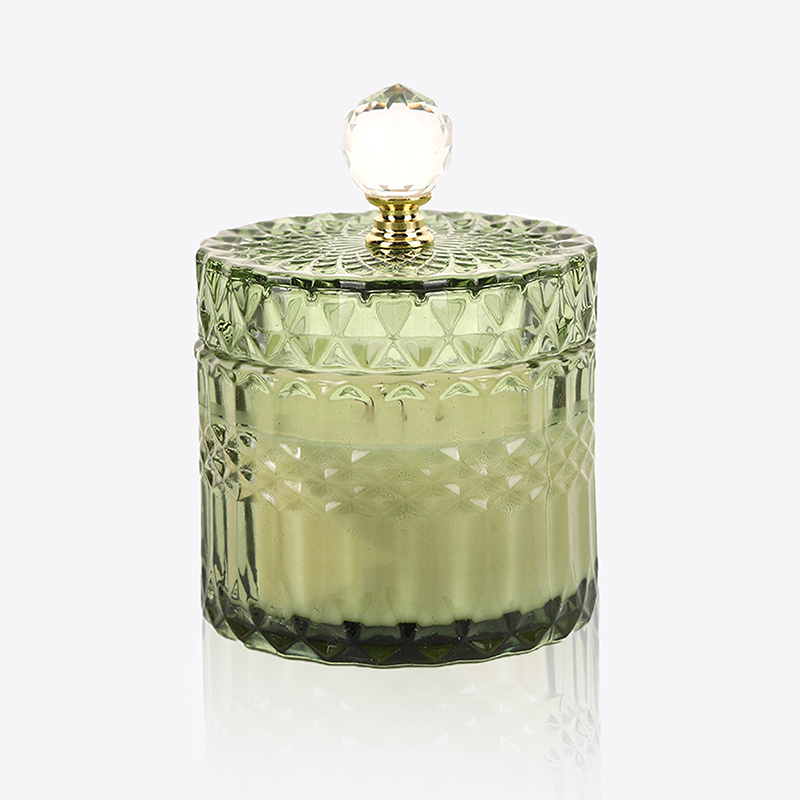 Organic Soy Wax Candle in Glass JarMade with 100% organic soy wax, this glass jar candle releases no harmful substances and burns cleaner than paraffin. It is a safe choice for kitchen air quality and family health.View Product →
When choosing a kitchen candle supplier, think beyond unit price. A lower price often means cheaper jars, thinner wicks, and less testing. Kitchen candles are placed where food is handled, so safety and consistency should be the first priorities. Retailers who build a kitchen candle assortment on a certified, quality-driven manufacturer usually see fewer returns, better reviews, and stronger reorder rates.
Key takeaway: The best kitchen candle manufacturer for wholesale orders combines factory certifications, burn test documentation, clean soy wax formulations, and the R&D ability to create a kitchen-specific private-label line.
Kitchen Candle FAQ
Can I use a regular scented candle in the kitchen?Yes, but the performance will be uneven. A regular scented candle may smoke in a warm kitchen, release fragrance too slowly, or carry a scent that clashes with food. A dedicated kitchen candle uses soy wax, a properly sized wick, and a fresh citrus or green fragrance to work in short burn sessions. |
What is the best kitchen candle scent for eliminating food odors?Citrus scents such as lemon, orange, and grapefruit are the most effective for covering garlic, fish, and frying smells. Green and herbal scents like basil, thyme, and eucalyptus also work well because they leave a clean, kitchen-like freshness without overpowering food. |
Are soy wax kitchen candles better than paraffin candles?For kitchens, yes. Soy wax is renewable, produces less soot, and has a lower melting point, which creates a cleaner burn in warm rooms. Paraffin candles are cheaper and have a strong scent throw, but the higher soot level is a disadvantage near food and kitchen surfaces. |
How long should I burn a kitchen candle at a time?Keep each burn session between one and four hours. On the first burn, allow the wax to melt evenly to the edge of the jar to prevent tunnelling. Never leave a burning kitchen candle unattended, even for a short time. |
Is it safe to burn a kitchen candle while preparing food?It can be safe if the candle is placed at least one meter away from the stovetop, away from paper towels, dish towels, and cooking oil. Always keep the candle on a stable surface and extinguish it before leaving the kitchen. Avoid placing it near a ventilation hood draft. |
Can a reed diffuser replace a kitchen candle entirely?A reed diffuser is a good complement, but it cannot replicate the immediate scent and ambient warmth of a candle. Diffusers provide continuous low-level fragrance and are safer for unsupervised spaces. Many households keep both: a reed diffuser for daily background freshness and a candle for dinners and entertaining. |
What should I look for when buying kitchen candles wholesale?Check factory certifications such as BSCI and WCA, ask for burn test reports, verify lead-free wicks, confirm fragrance compliance for your target market, and review the quality control process for wick centering and fill levels. Choose a supplier with experience in both standard and custom kitchen candle production. |
Can I request custom scents and jars for a private-label kitchen candle?Yes. A kitchen candle manufacturer with in-house R&D can develop custom fragrance oils, select specific glass jars or cement cups, design labels, and adjust wax blends such as soy-coconut. Customization usually starts with a stock candle base that is then adapted to the buyer’s scent, colour, jar, and packaging requirements. |
Key takeaway: A kitchen candle is most effective when it is made from soy or soy-blend wax, features a citrus or green fragrance, sits in a stable jar, and is burned under controlled conditions during short cooking or dining periods.
Related Resources on Kitchen Candles
For more information on new kitchen candle designs and safe candle handling, explore the resources below.
Key takeaway: A successful kitchen candle program combines dependable product quality with clear safety instructions. Use these resources when developing or refilling your kitchen candle assortment.

Táirgí te

Nuashonraigh Nuacht
FOGHLAIM TUILLEADH
 IDIRGHABHÁIL LEIS SAM
NAISC LUATH
TÁIRGÍ
TEAGMHÁIL LINN
- Phone:díol04@nb-ádh.cn
- Tel:1
- E-mail:[email protected]
- Address:+86-0574-88408268



